Thursday, September 22, 2016

Bangor


We didn't leave much time for Belfast on our trip to the north coast. We arrived late in the afternoon and explored the Titanic museum, spent the night in Bangor, and then spent the next morning taking the bus tour of Belfast. Posts to follow.

Bangor is located on the coast about 10 miles east of Belfast. Our B&B was on Seacliff Road, overlooking the water. Dinner was at the Rabbit Rooms, just down the street, where I had more mussels in a single sitting than I've ever had before. And pretty cheaply, too.

The normal breakfast routine at B&Bs - we typically ate around 8:30 - allowed me time for an early morning walk (not that I always did this) and a chance for M to sleep in (not that she always did this). In Bangor, I watched the sunrise over Ballyholme Bay, half a mile farther east.


Wednesday, September 21, 2016

Brú na Bóinne


Our two days in Dublin helped get us oriented and gave our bodies a chance to adjust to local time, but then our adventure really began. We rented our car at the airport and headed out on our grand tour. On the left side of the road. With the gear shift on the left. And the signs all in both english and Gaelic.

Our first stop after we rented the car - or at least the first stop that wasn't driver stalling the car while looking for the gear shift - was half an hour north of Dublin off the M1. The Brú na Bóinne refers to an area along the River Boyne that contains several ancient passage tombs, the best known of which are Newgrange and Knowth.

We  were able to see Newgrange in the distance, but the tours were booked for hours, so we went to Knowth, which is nearby. While Newgrange seems to consist primarily of one very large, mound, Knowth is a complex of many mounds (each a tomb with internal passages). One is very large, while the rest are smaller, but perhaps older.

It wasn't their size or complexity that struck me the most. It was that these structures go back to 3300BC (give or take a few years) and predate both the Pyramids and Stonehenge.


Dun Laoghaire


Sunday evening we decided to take the DART train out to Dun Laoghaire south of Dublin. The city itself was packed with football (soccer) fans celebrating after a big regional game, but fortunately they weren't all trying to get on the outbound train at the same time as us.

We had a great dinner, then wandered down to the jetty to watch the sunset over the bay. Afterward we joined the queue at Scrumdiddly's for ice cream - which just seemed to be the thing to do. After all, everyone else was.

Since it may not be obvious, Dun Laoghaire is pronounced "Dun Leary," which is a bit easier to say than the way I was trying to pronounce it before.


Guiness Storehouse


Right up there with Kilmainham Gaol for tourists is the Guinness Brewery. The original storehouse has been converted into a bit of a stout-oriented theme park.

The first floor is mainly a large gift shop for all things Guinness. Arthur would be proud, or maybe shocked. We worked our way upwards through the various levels learning a little about how Guinness is brewed, before ending up on the 6th level, where they offer lessons in how it is poured. I skipped the lesson on pulling a correct draught (something about letting it sit for two minutes before topping it off). The lines were pretty long and I figured I'd never have to draw it from the tap myself. I can have the bartender pull the draft for me, or I can open a bottle.


There's a circular, glass-walled lounge perched on top of the storehouse where you get your complementary (comes with admission) beer poured and can look out over Dublin.  Dublin has well more than a million people, but few buildings that rise higher than this 7th floor bar.


Kilmainham Gaol


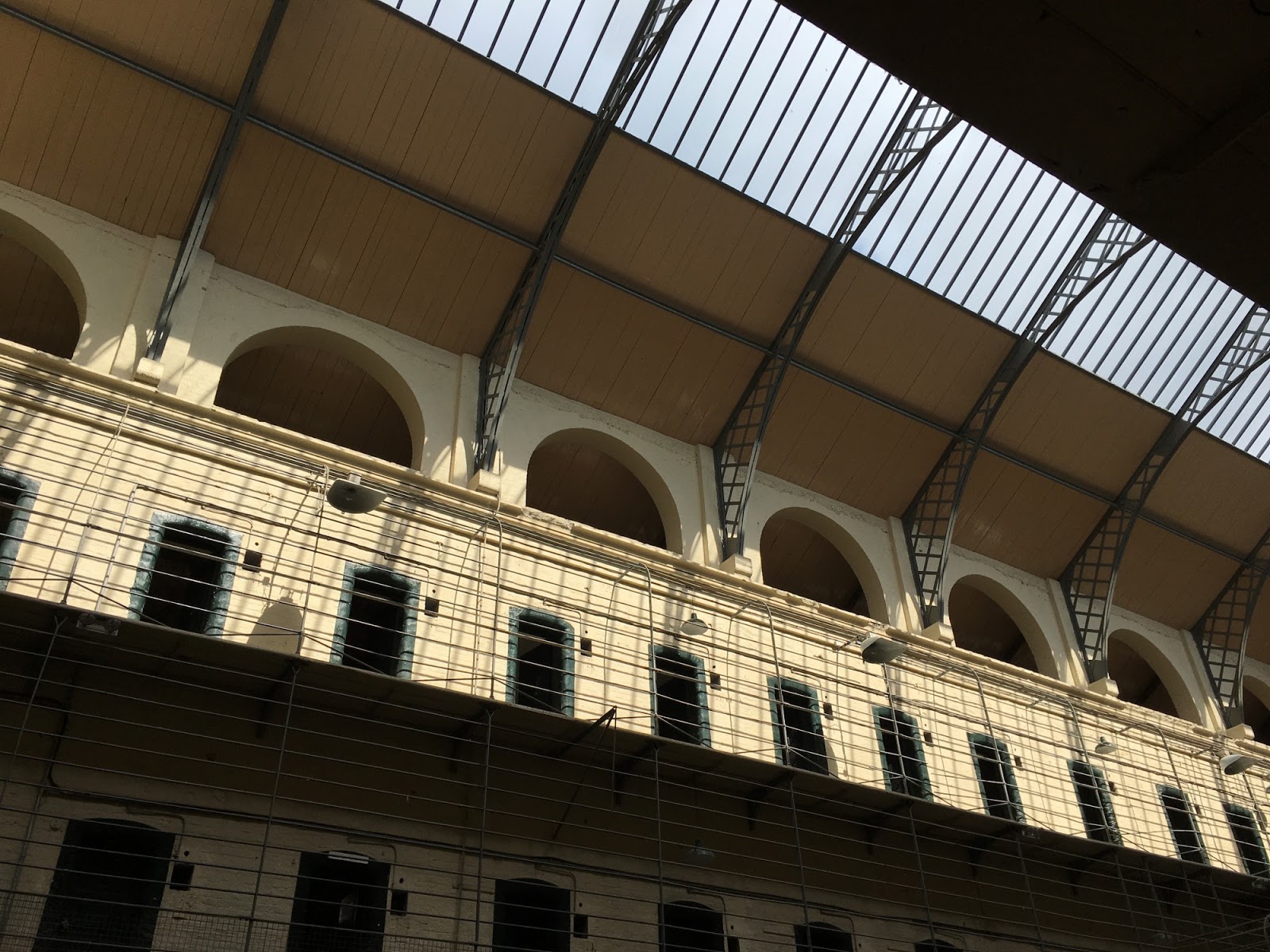
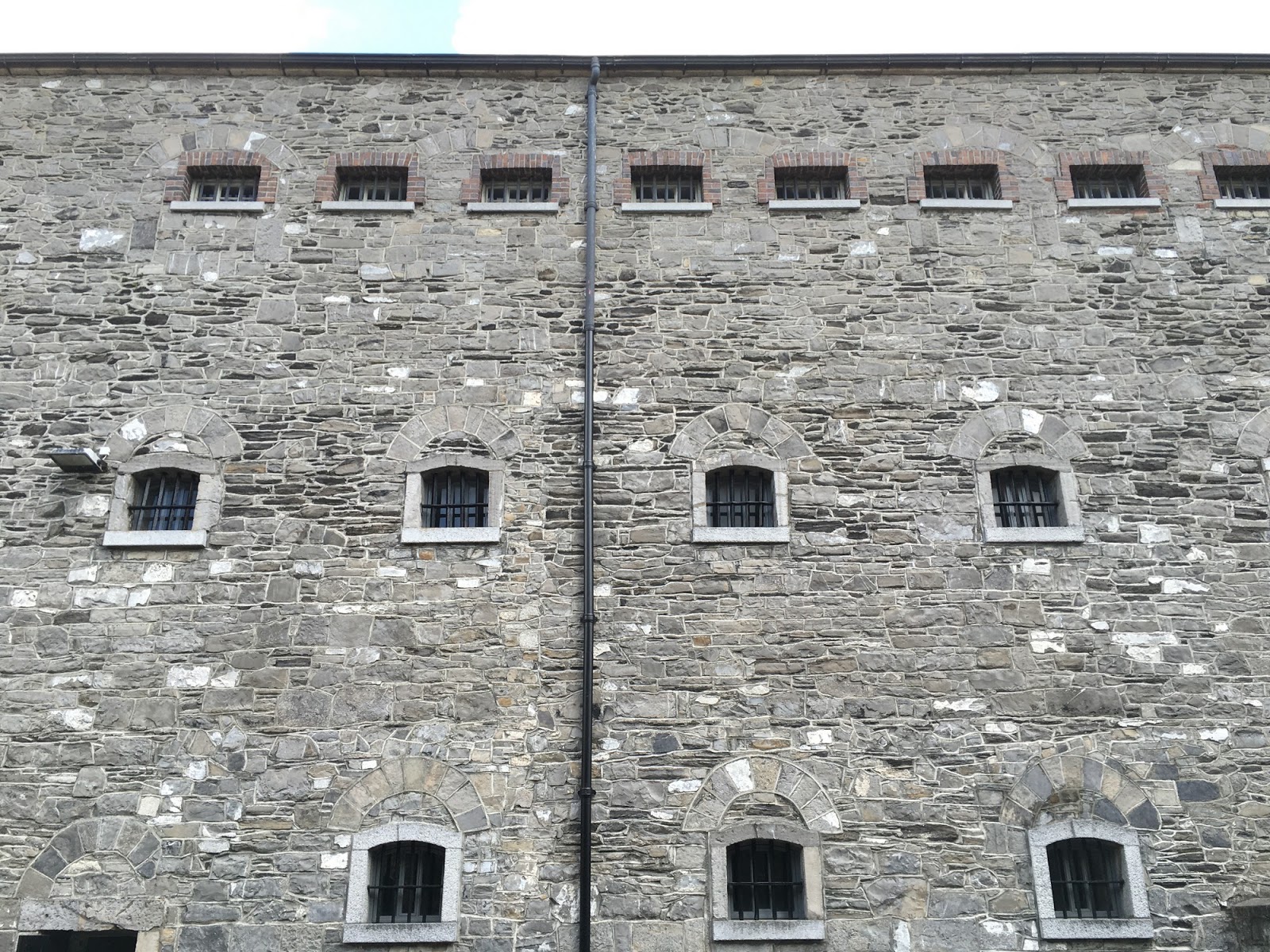
Kilmainham has become a standard stop on the Dublin tourist trail and one of the city's top recommendations. So, of course, it was on our list. It was well worth the visit.


Our tour guide did a nice job of describing the history of the 18th century prison. It was built at a time when prison reform was leading to more progressive designs and management - including things as simple as more separation of prisoners and more light - But it must still have been a horrible and often over-crowded place, particularly in the mid-1800's when the famine drove many people to prison simply to find a meal.

The prison's main fame today is that it is where the British executed the leaders of the 1916 Easter Rebellion. 100 years isn't really that long ago and I think part of the poignancy of the story - of the prison and maybe of modern Ireland in general - is that the violent history still seems near. Of course, in Northern Ireland, it is much closer.


River Liffey


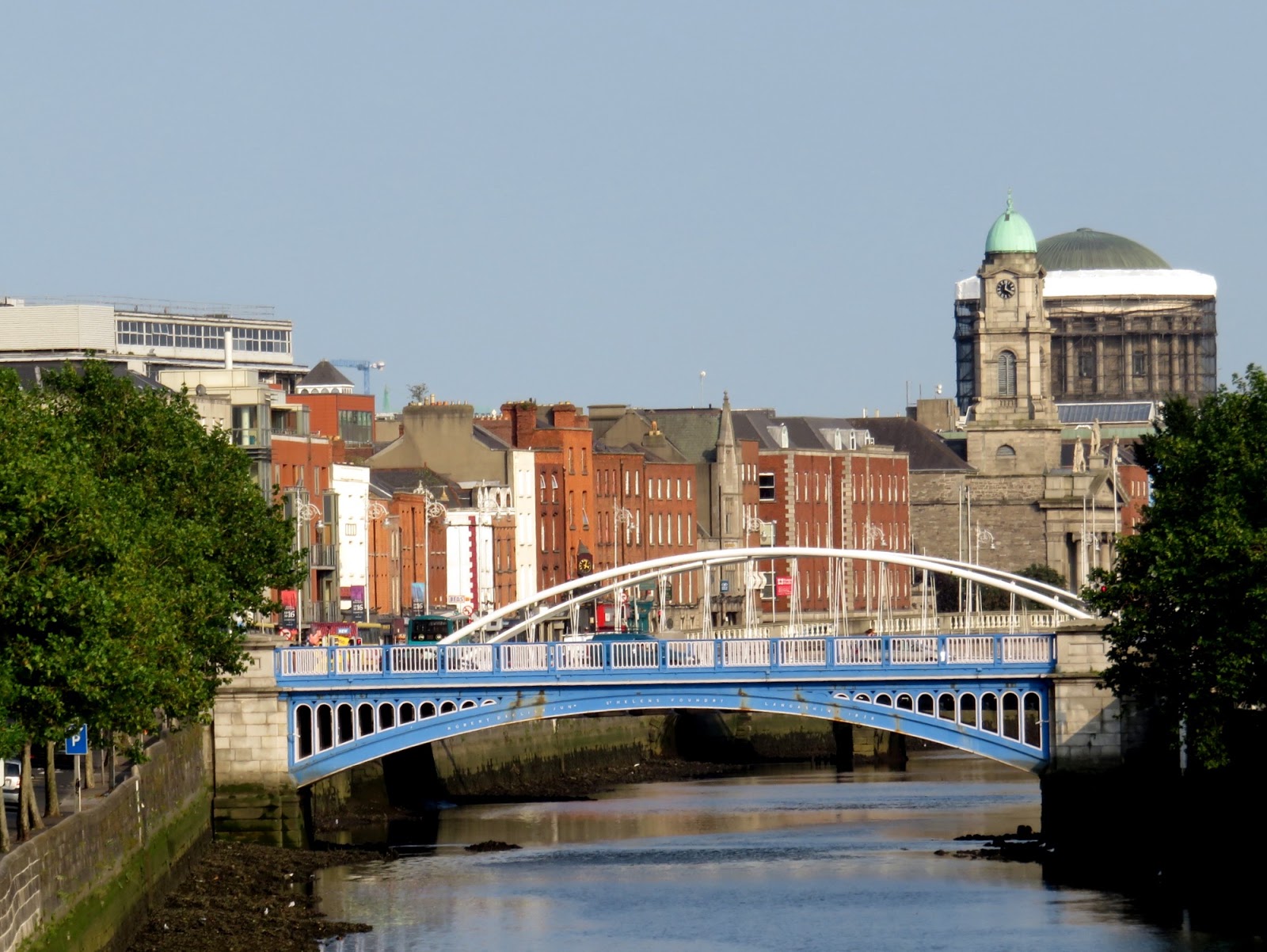
Dublin's name comes from the Gaelic for "dark pool," a reference to the tidal pond that lay at the confluence of the River Poddle and the Liffey (thanks, Wikipedia), not far from the Harding Hotel, where we were staying. From my very limited research, and a little estuarine intuition, the lower Liffey was probably wider and muddier at that time, but the city agradually closed in on it, filling out over tidelands until what was left was the fairly straight channel that now flows past Temple Bar. Until the 19th century, boats could apparently tie up along the quay well into this area.

Most cities are located along rivers and the rivers, and their bridges, often define them and add character. They also often divide cities into districts - in Dublin there are definitely history and stereotypes that divide those portions of the city north and south of the Liffey, though we heard that maybe some of those distinctions were getting a little fuzzy.


Monday, September 19, 2016

Dublin


We were exhausted, having arrived in the morning with virtually no sleep, but wanted to keep moving so as to shift our bodies into the new timeframe. So we walked - all over Dublin - or so it seemed. Our first stop was an ATM for Euros, then a walk up O'Connell Street to the Dublin Spire, before returning to the market in Temple Bar for lunch.

Then we wandered over to Trinity College (the lines were long and we put off the tours until our return to Dublin at the end of our trip), then down Grafton Street (we didn't shop), to St. Stephens Green. From there we went to Merrion Square, where I guess Oscar Wilde once hung out. I had a list of coffee places, so our next stop was 3fe Coffee (where we sat long enough for me to have a good latte, but not long enough to fall asleep at our table). We walked down Macken Street, apparently where all the tech firms are setting up shop, then checked out the Samuel Beckett Bridge (a cable stayed bridge that reflects an Irish harp).


We took the LUAS (light rail) back on the north side of the river to our part of town and walked back to the hotel. We had dinner at the Fish Shack in Temple Bar, then went back and collapsed!


Temple Bar


Fishamble Street, where we were staying, marks the western edge of the Temple Bar district, which seems to consist of many more bars than of temples. Better to attract the tourists and the drunken crowds. The narrow streets are loud and colorful and seem to mark the center of Dublin, at least for visitors.

Various folks advised against Temple Bar - mainly on account of overpriced food and drink - but we found two great dinners that didn't seem too outrageous (The Fish Shack and The Chameleon). And the day we arrived, we had lunch at the Saturday Food Market in Meetinghouse Square.


Fishamble Street


Our trip began with two days in Dublin, in part to give us a chance to recover from the long flight and the time change and in part to give us some time to explore Ireland's biggest city (1-2 million people). Much of our trip would be much more rural and remote.

We stayed at the Harding Hotel, across from Christ Church Cathedral (one of two cathedrals in Dublin, which reflects (or caused) a wee bit of confusion in Irish religious history). This area is very close to the site on which the Vikings initially settled the city back in the 9th or 10th century (although there were probably already some people living around here).


Sunday, September 18, 2016

Air Canada 1940


Our Ireland trip started with a drive to Vancouver, where we parked in our friends' driveway in Ladner and took a cab to the airport. We were flying Air Canada Rouge,  AC's "leisure airline." Apparently, leisure means "cheap." Despite some initial concerns after reading the reviews, I was able to fit into the seat without having to remove my kneecaps first. I think they fed us, though it must not have been anything memorable.

The flight left at 3PM and arrived in Dublin a little less than 9 hours later, at 8:30AM, just as we were finally getting ready to go to sleep.

Cloud cover and nighttime made it difficult to make out what we were flying over - although I did make out the dusky western shore of Hudson Bay and the mouth of the Nelson River. And maybe southern Greenland a few hours later, but by then it was awfully dark. The bottom photo was taken somewhere over Saskatchewan.

I write this back in Seattle more than three weeks later. With any luck, our trip will play out here in 20-30 posts over the next couple of weeks. As usual, the somewhat parallel beach collection will show up on Gravel Beach.