Showing posts with label denmark. Show all posts

Tuesday, July 10, 2018

Skagerrak


The Skagerrak is the eastern arm of the North Sea that separates southern Norway and Denmark. Farther east and south, it becomes the Kattegat, on its way to the Øresund, near Copenhagen, and the Baltic. I learned about the Kattegat and the Skagerrak from some strategy board game when I was a kid. I think it was called Diplomacy. Pronouncing them was easy, but now I'm having to learn how to spell them.

When you take a ferry from Hirtshals on the northern coast of Denmark to Kristiansand, on the south coast of Norway, you sail west northwest across the Skagerrak. Which is what we did, on a very large, very fast Colorline ship. The SuperSpeed ferry holds more than 2000 passengers, more than 700 cars, and can go 27 knots.

We landed in Kristiansand mid-afternoon on June 19th. We would be in Norway until July 4th, when we would drive across the bridge into Sweden after leaving Oslo.


Grenen


Jutland, the large peninsula that comprises most of western Denmark, ends in a sharp sandy spit just north of the town of Skagen.  The point is Grenen, and it marks where the Skagerrak on the west meets the Kattegat on the east. Some places have more geographic significance than others. For a good part of an hour a few weeks ago (June 19th), I had it pretty much to myself.

We were staying in Frederikshavn, 45 minutes south. I got up at the crack of dawn and drove up through Skagen and past the lighthouse, then walked the last kilometer out to the tip. There were scattered storm clouds and a stiff breeze, but it stayed dry and relatively pleasant.


Old bunkers (not surprising that this place has had great military importance and a rich history) were collapsing into the sea. A fleet of large cargo ships were anchored in the distance on the eastern, Kattegat, side, and a large three masted ship was cruising by (not under sail). The sand was blowing across the beach. Waves were crashing in the sunglint far offshore where the tides and the winds clashed. Birds hung out on the sandbar where Denmark slides into the sea, except when I got a little too close. There was someone else wandering around in the dunes, but I enjoyed being the only person out on the point that morning.

Of course, it was also nice to make it back for breakfast at the hotel with M. And with plenty of time to still make it to Hirtshals for the ferry to Norway at noon.


Monday, July 09, 2018

Tivoli Gardens


Tivoli is one of the oldest amusement parks in the world and a role model for the modern theme park. Like many parks, they've added some newer rides - I doubt steel looped and upside down roller coasters were part of the original version. We went on one of the older ones - a mountain roller coaster with an operator pulling on a brake lever in the middle, but none of the new ones. M has had to accommodate my increasing resistance to more extreme rides.


The park seemed a little old-fashioned, but maybe that's part of the point. We wandered around, but didn't stay late. We were tired and had to get a good night's sleep. Our real trip would begin the next morning when we picked up the car at the airport.


Louisiana Museum


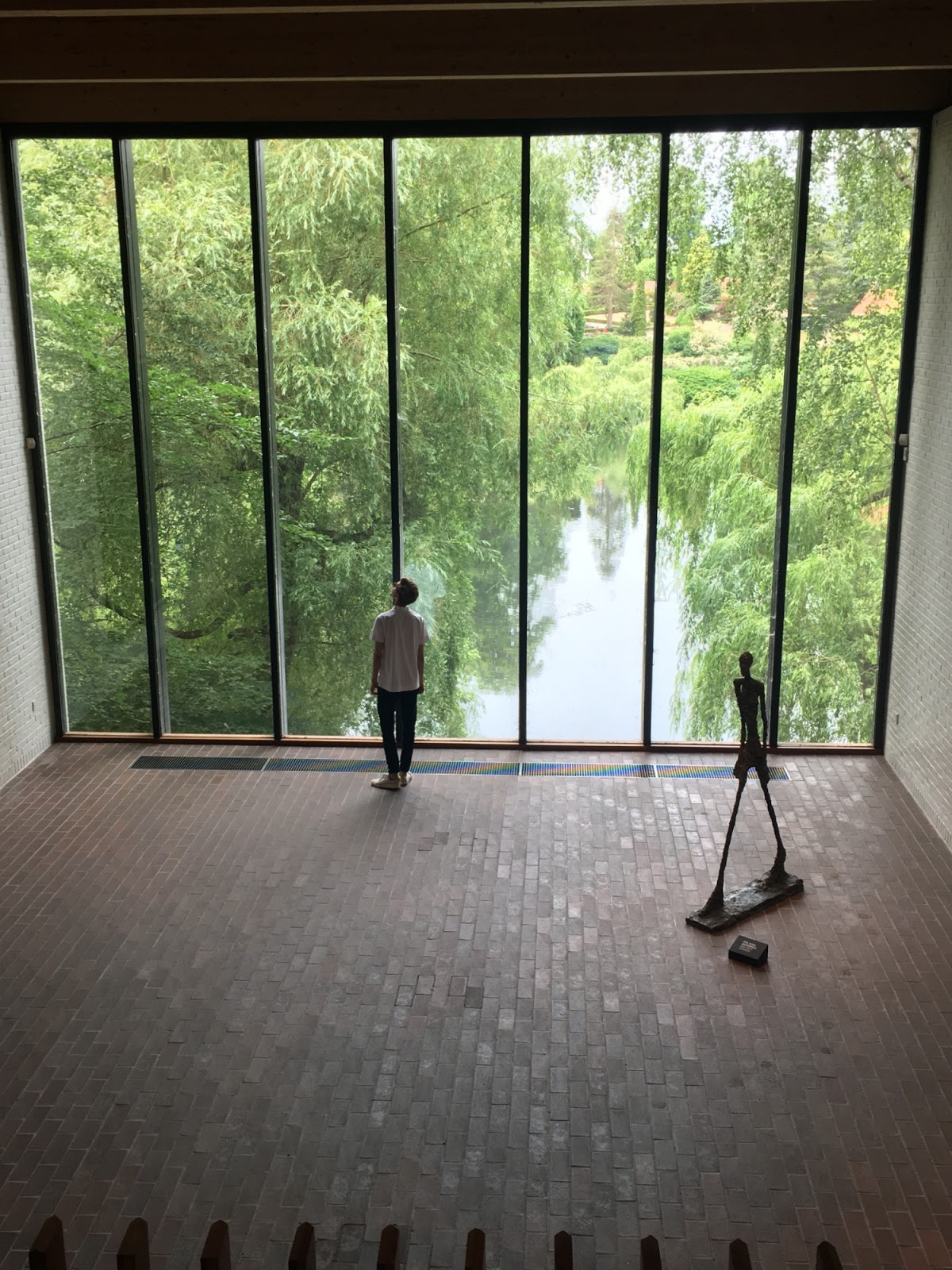
The Louisiana Museum of Modern Art is located in Humlebæk, on the coast about 20 miles north of Copenhagen. We took the train from the city, and then walked the fifteen minutes or so to the museum.


The museum is a great series of indoor galleries and outdoor spaces, perched on a low bluff looking across the water toward Sweden. They had a mix of sculpture and painting, some by artists I'd even heard of, and a few harder to classify installations - like the dark space full of color-shifting lights.

Amager Strand


Amager Strand lies south of Copenhagen, down towards the airport. It's easy to get to on the Metro, and probably by bike, too, so it's well located for the summertime crowds. Although they weren't in evidence during our visit.

The beach faces east onto the Øresund.  A line of windmills stands offshore. The big Øresund Bridge lies in the distance to the south. And a steady stream of airplanes could be seen approaching CPH. There were windsurfers on the lagoon, and some kayakers, but no one was swimming in the ocean.


Vors Fleslers Kirke


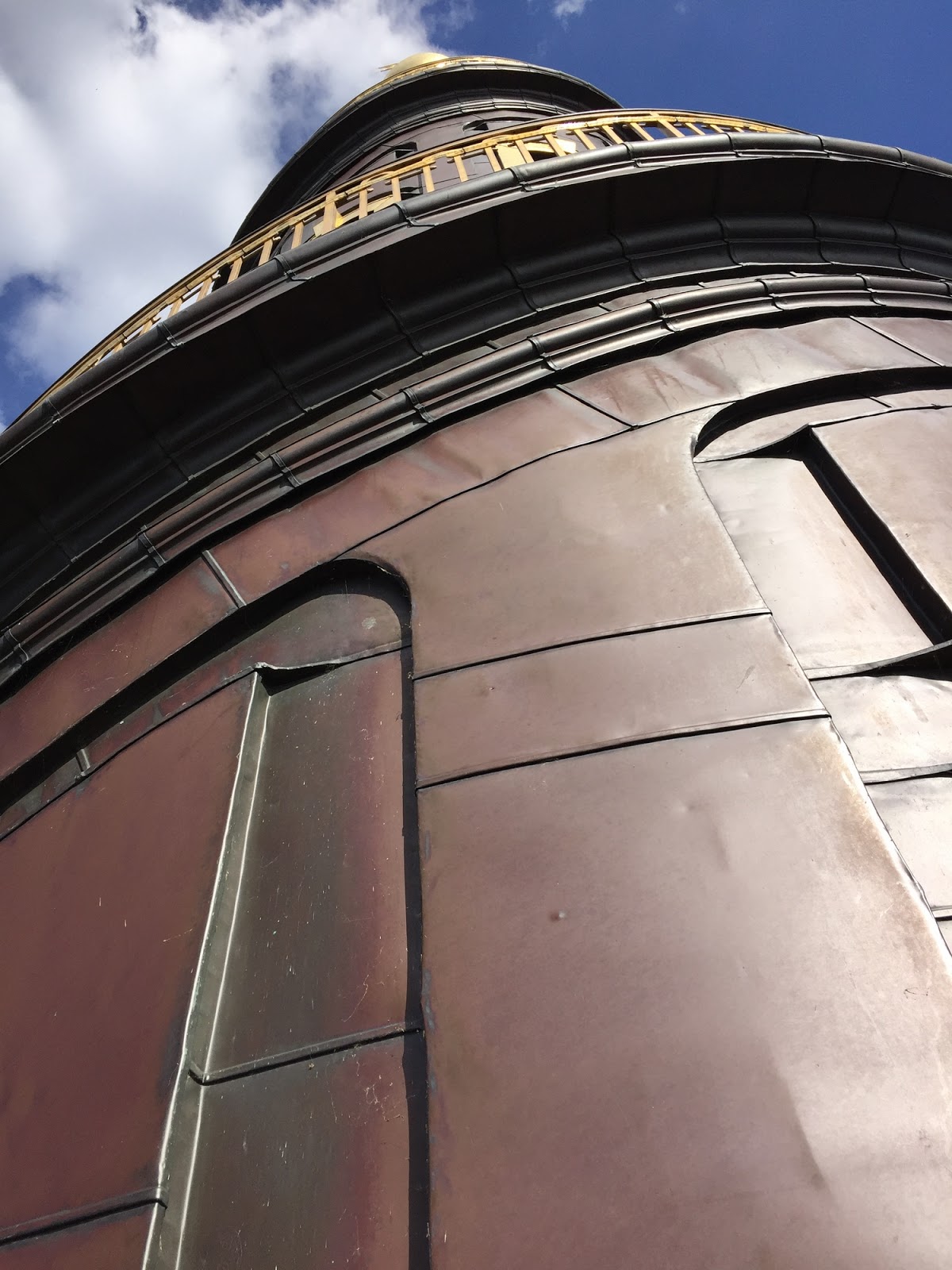
One of the more intriguing steeples in Copenhagen is on Vors Fleslers Kirke (Church of our Savior), in the Christianhavn neighborhood. It wasn't on our to do list, but we were in the area and M seemed game.


I was probably more comfortable with the 400+ stairs, but when we got up to the top of the spiral stair case that winds up the outside of the tower, I was the one hesitating. M headed right to the highest point without out any qualms, while I lagged behind, contemplating the exposure.


Christiania


In 1971, some locals occupied an old military barracks, the government sort of let things slide, and Freetown Christiania was born. Apparently, the small community governs itself (hippies, not anarchists, I guess).

The drug trade - at least for softer stuff - is tolerated, if not promoted. Cannabis, including hash, was being openly sold from stands along Pusher Street. But the lines are blurry and it sounds like both the community and the authorities (some government authority still applies) aren't quite sure where to draw the boundaries. As we left, there was a very deliberate-looking group of police heading in.

But it's also just a big tourist draw, full of colorful buildings and colorful people. There are arts and crafts, and tie dye, and food shops (sort of like the Saturday Market on Salt Spring, but without as much goat cheese). The bustle of activity in the central portion falls off rapidly as one wanders back into the more rural parts of the community back along the canal.


Nyhavn


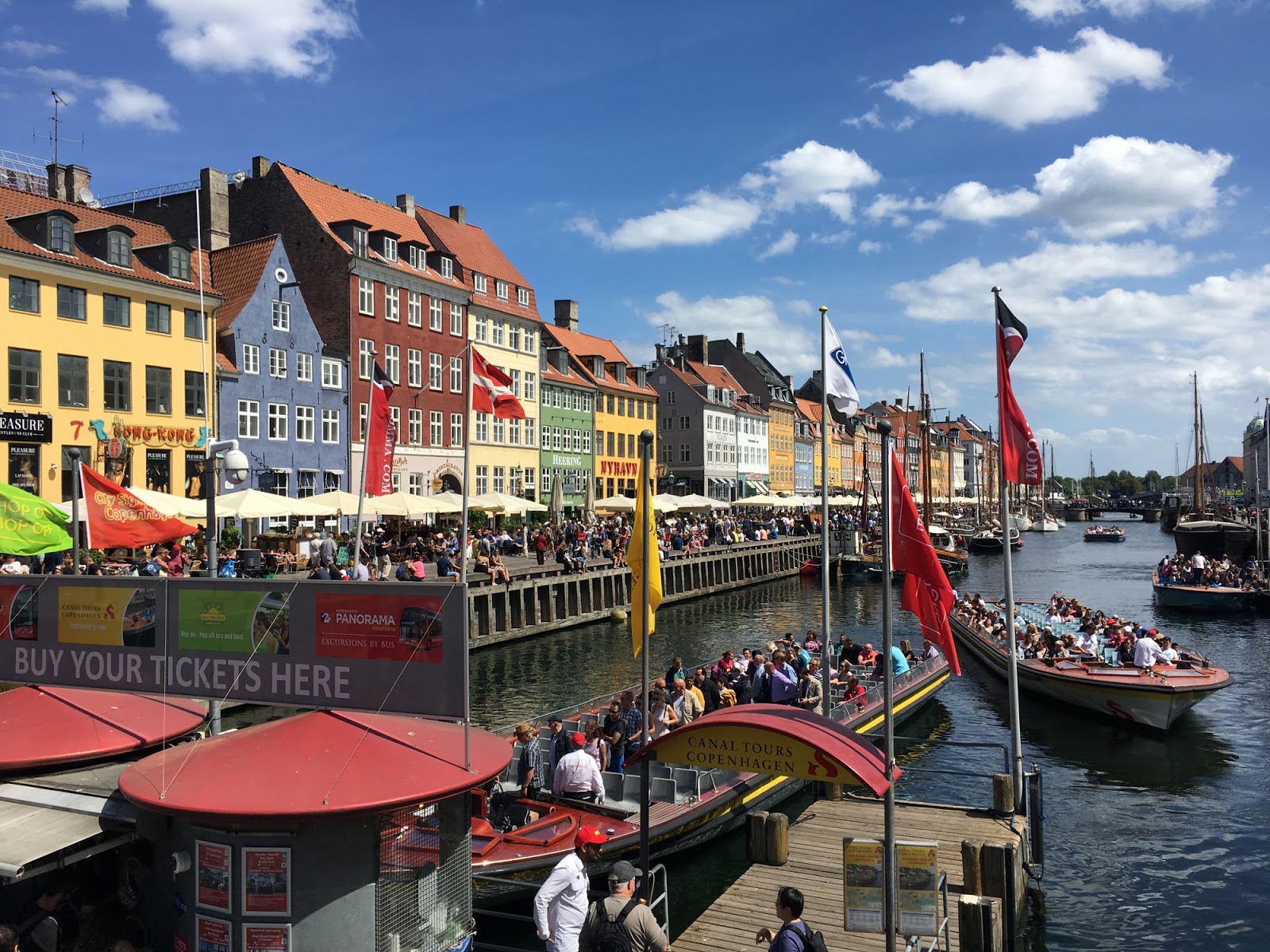
Nyhavn, Copenhagen's "new harbor," dates back to the 17th century. It's a dead end canal extending perpendicular to the main harbor, lined with colorful warehouse buildings. While their history is still evident, the harbor and the warehouses haven't been used for marine cargo in a long time. The old wharf is now a line of cafes and souvenir shops and Nyhavn is a major tourist hub, with bus and boat tours diverging in all directions.


The straight line of brightly painted 4-5 story wood structures was typical of other wharf districts in Scandinavia, most notably Bergen's Bryggen (although I'm not sure the history is quite the same).